Mother and Baby One Line SVG – A Designer's Honest Review
First Glance: What This Design Actually Says
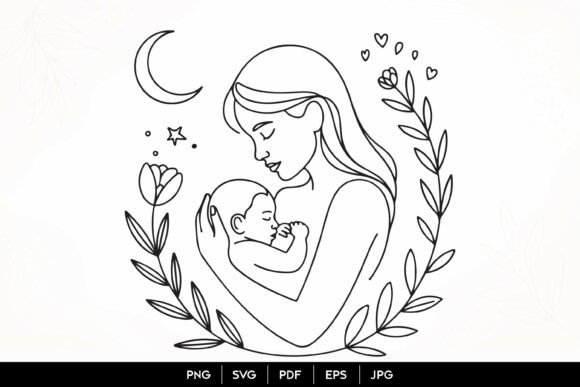
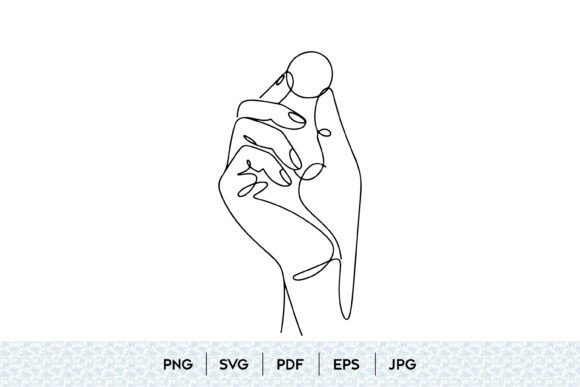
I opened the zip file for Mother and Baby One Line SVG expecting yet another sentimental curve drawing. What I found was something quieter. The single continuous line traces a mother holding an infant, and the entire composition breathes without trying too hard. There is no forced sweetness here. The arc of the back, the tilt of the head, the way the baby nestles into the chest — it reads as protective, calm, and genuinely tender. As someone who has tested hundreds of one-line designs on fabric, I immediately started picturing where this would land best.
The Illustrations category placement makes sense. This is not a typographic piece or a layered scene. It is one clean vector shape, and that simplicity is exactly what makes it versatile for embroidery. The Graphics format means it arrives as a flat, scalable file that can be imported into digitizing software without much cleanup. For embroidery designers, that matters more than most buyers realize.
The Mood and Where It Belongs
This design carries a quiet intimacy that works best on products meant to feel personal. I kept circling back to the same handful of project ideas: a custom embroidered tote bag for a new mother, a baby blanket with a single corner accent, a sweatshirt worn during postpartum days, a pillow cover for a nursery rocking chair. The line itself feels modern, almost minimalist, so it avoids the overly cute territory that can make some motherhood designs feel dated after a season.
If you sell on Etsy or run a small craft business, this is the kind of design asset that attracts customers who want something understated. I have learned that buyers looking for a personalized gift often gravitate toward imagery that feels like a sketch rather than a polished illustration. Mother and Baby One Line SVG fits that brief perfectly.
Testing It Mentally on Real Fabric
I always run a mental stitch simulation before I commit any design to thread. With this one, the continuous line suggests a running stitch approach would preserve the sketch-like quality. A satin stitch could work too, but I would keep it narrow — maybe two millimeters — to avoid losing the delicate flow. A heavy fill stitch would ruin the airiness that makes this design work. The line weight appears consistent throughout, which means fewer headaches when setting stitch density in your digitizing software.
One thing I noticed immediately: the baby's form is suggested rather than detailed. There are no facial features, no tiny fingers, no intricate folds. That is a good thing for embroidery. Tiny details are the first to blur under thread, especially on textured fabrics like terry cloth or fleece. This design sidesteps that problem entirely by staying deliberately minimal.
A Real Scenario: The Custom Tote Bag Project
Last month, a client asked me to create a handmade product for a baby shower gift. She wanted something elegant, not cutesy, and she needed it on a natural linen tote. I wish I had Mother and Baby One Line SVG in my library back then. I ended up using a different design, but the stitch clarity on that textured linen was a struggle because the original artwork had too many thin connectors. This one-line piece, with its clean sweep and lack of sharp transitions, would have stitched out far cleaner.
For a project like that, I would hoop the linen with a medium-weight cutaway stabilizer, choose a single thread color — probably a warm charcoal or muted taupe — and run the design at about four inches wide. The result would look like a hand-drawn sketch permanently etched into the fabric. Customers respond to that kind of finished product because it feels artistic, not mass-produced.
Where It Shines and Where It Needs Caution
Let me be practical about fabric choices. This design will sing on smooth, stable surfaces: cotton canvas, twill, denim, linen, quilting cotton, and even softshell jackets. On a sweatshirt or hoodie, the continuous line will hold up well if you use a water-soluble topper to prevent the stitches from sinking into the fleece. I have made that mistake before — skipping the topper on a plush fabric — and the result was a blurred, fuzzy line that looked nothing like the original design.
Where I would exercise caution:
- Small hoop sizes — Shrinking this too much could cause the line to collapse into itself. I would not go below three inches wide without testing.
- Stretchy fabrics — Knit fabrics like jersey or ribbed cotton need a firm stabilizer and possibly a basting stitch to prevent shifting. The continuous line means any distortion will be immediately visible.
- Dark fabrics — Thread color contrast becomes critical. A dark navy sweatshirt with black thread would swallow this design entirely. Test your thread on a scrap of the actual fabric first.
- Curved surfaces like caps — The flowing line could warp on a curved bill. I would place this on the side panel of a cap rather than the front, or use it on a flat patch instead.
- Frequent washing — If this goes on a baby onesie or kitchen towel, use a dense enough stitch and quality thread to survive repeated laundering. Polyester thread over cotton for durability.
The Commercial Side: Selling What You Make
For Etsy sellers and small shop owners, the appeal of Mother and Baby One Line SVG lies in its broad demographic reach. This is not just a Mother's Day design. It fits baby showers, birth announcements, postpartum gifts, breastfeeding advocacy products, and even memorial pieces. The emotional range is wider than most motherhood graphics I have reviewed. A simple line drawing can mean different things to different people, and that is a selling advantage.
If you are building a craft business around embroidered goods, consider pairing this design with a short word or date underneath — a baby's name, a birth date, or the word "mother" in a delicate script. The contrast between the organic one-line shape and clean typography can elevate the entire handmade presentation. I have seen products with that kind of pairing sell out at craft fairs within the first two hours.
Digital Product Sellers: What to Check
The zip file includes PNG at 300 ppi, JPG, EPS, SVG, and PDF formats. For embroidery digitizing, the SVG or EPS will be your starting point. These vector formats import cleanly into most digitizing software, and the single-path nature of the artwork means you will not spend hours cleaning up stray nodes. However, I always recommend opening the file and inspecting the path structure before importing. Sometimes one-line designs are actually composed of multiple segments that look continuous but are not. A quick check can save you from a digitized file that jumps unexpectedly from one segment to another.
I also suggest testing the design in a black and white mockup before committing thread colors. What looks balanced on screen can feel top-heavy or bottom-heavy once you remove color. A grayscale preview helps you see the visual weight distribution, which matters enormously for embroidery placement on garments.
Thread, Color, and Visual Impact
With a one-line design, thread color does the heavy lifting. I have found that monochromatic thread choices — especially warm neutrals, soft golds, rose golds, muted olive greens, and dusty blues — enhance the emotional tone without overpowering the simplicity. A metallic thread could work for a special occasion piece, but I would test stitch quality first because metallic threads are less forgiving on continuous lines.
On light fabrics, a medium-contrast thread creates a subtle, elegant result. On darker fabrics, a lighter thread pops beautifully but also exposes every stitch irregularity. If you are new to embroidery, start with a mid-tone fabric and a matching thread that is only slightly darker or lighter. The forgiving contrast will hide small imperfections while still showing the design clearly.
Stabilizer and Hooping Notes
I cannot stress enough how much stabilizer choice affects a one-line design. Because there is no fill area to anchor the stitches, the entire design relies on a stable foundation. For most projects, I recommend a medium-weight cutaway stabilizer for garments and a tear-away for flat items like pillow covers or wall hangings. If the fabric is particularly lightweight, add a second layer of stabilizer or switch to a fusible variety to prevent puckering.
Hoop tension matters more than usual here. A loose hoop will cause the continuous line to drift, and once a line drifts, the whole piece looks amateur. I double-check my hoop tension before starting any single-line embroidery, and I keep a close eye on the first few hundred stitches.
Personalization Potential and Giftability
One of the strongest selling points for Mother and Baby One Line SVG is how easily it accepts personalization. Add a name, a date, a short quote, or even a small heart accent, and the design transforms into a personalized gift that feels custom-made. This is the kind of product that earns repeat customers. A buyer purchases a tote for her sister's baby shower, and three months later she returns for a blanket for her cousin. The design stays consistent, and the personalization makes each piece feel unique.
For holiday embroidery, this design works well on Christmas ornaments, Mother's Day keepsakes, and Valentine's gifts. The emotional resonance does not fade with seasonal trends, which means you can keep it in your permanent product lineup rather than rotating it out after a single holiday rush.
Brand Consistency and Professionalism
If you are building a craft brand around modern, minimalist designs, Mother and Baby One Line SVG fits squarely into that aesthetic. Consistent style across your product listings builds customer trust and makes your shop recognizable. When a buyer sees a cohesive collection — one-line family portraits, one-line pet designs, one-line couple illustrations — they perceive your brand as intentional and professional. This design can anchor that collection or complement existing pieces.
For printable mockups and digital product previews, the included PNG file at 300 ppi is high enough resolution to create clean listing images. I use mockups extensively in my own shop, and a crisp, well-placed design on a realistic product photo can increase conversion rates noticeably. Just make sure your mockup accurately represents the embroidered result, not just the printed version. Buyers need to see what the stitched product will actually look like.
Final Practical Thoughts Before You Stitch
Every design has a learning curve. With Mother and Baby One Line SVG, the curve is gentle. The simplicity that makes it beautiful also makes it forgiving. But do not skip the test stitch. I have been burned by assumptions before, and a ten-minute test on scrap fabric has saved me from ruining expensive blanks more times than I can count.
Check your thread tension, confirm your hoop size accommodates the design at your intended dimensions, and review the stitch density settings in your digitized file. If you are unsure about commercial embroidery usage, verify the licensing terms before selling finished products. The file package includes multiple formats, which is generous, but licensing clarity is something every small business owner should confirm independently.
In the end, this is a design that understands its audience. It does not try to dazzle with complexity. It trusts that a single, well-drawn line can say enough. And in my experience, those are the designs that sell steadily, stitch beautifully, and earn the quiet appreciation of customers who see their own relationships reflected in the thread.